
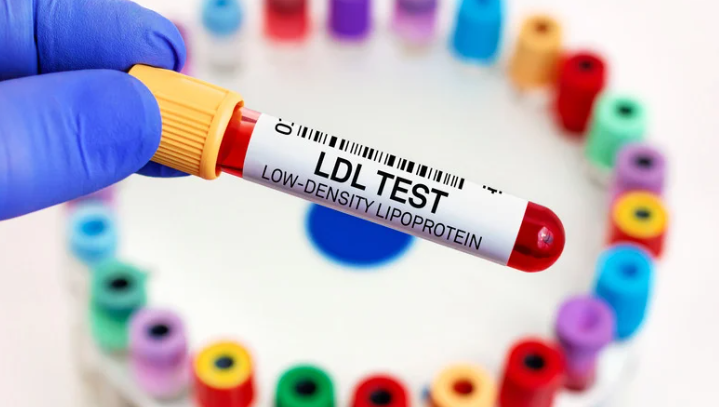
High cholesterol becomes a concern when certain types accumulate in artery walls over time, increasing the risk of cardiovascular disease. To understand why, it helps to look at how cholesterol moves through the body.
Cholesterol is often labeled simply as “good” or “bad,” but that shorthand hides what cholesterol actually does in the body. Cholesterol is not inherently harmful. In fact, it is essential.
Your body uses cholesterol to build cell membranes, produce hormones, and create vitamin D. By understanding high cholesterol levels, you’ll realize that the problem is not cholesterol itself. It is how it is transported and how much circulates in the bloodstream.
HDL vs. LDL: What the Labels Mean
Cholesterol does not travel alone. It is carried through the bloodstream by lipoproteins, particles made of fat and protein. The two most discussed types are LDL (low-density lipoprotein) and HDL (high-density lipoprotein).
LDL is often called “bad” cholesterol because it carries cholesterol from the liver to tissues. When LDL levels are elevated, excess cholesterol can deposit in artery walls, forming plaques. Over time, plaque buildup can narrow arteries and reduce blood flow.
HDL is referred to as “good” cholesterol because it helps transport excess cholesterol back to the liver for processing and removal. Higher HDL levels are generally associated with lower cardiovascular risk, though the relationship is more complex than once believed.
Explore What Is Blood Pressure, Really? for related insight into cardiovascular health
How Plaque Forms in Arteries
High LDL levels alone do not immediately cause a heart attack. The process is gradual. When LDL particles penetrate the inner lining of arteries, they can undergo oxidation, which triggers an inflammatory response.
Immune cells attempt to clear these oxidized particles, but repeated exposure can lead to the formation of fatty streaks. Over the years, these streaks develop into plaques, which are thickened areas within the arterial wall.
Plaques can remain stable for long periods. However, if a plaque ruptures, it may trigger clot formation. A clot that blocks blood flow to the heart or brain can result in a heart attack or stroke.
Read What Actually Happens During Inflammation? for more insights on plaque buildup.
What Influences Cholesterol Levels
Cholesterol levels are shaped by both genetics and lifestyle. Some individuals inherit conditions that cause elevated LDL levels regardless of diet. This is known as familial hypercholesterolemia.
Diet plays a role, though not always in the ways assumed. Saturated fats can raise LDL in many people, while trans fats are strongly linked to increased cardiovascular risk. Dietary cholesterol itself has a smaller impact on blood cholesterol levels in most individuals than previously thought.
Physical activity can increase HDL levels and improve overall lipid balance. Excess body weight, smoking, and poorly controlled diabetes are associated with unfavorable cholesterol profiles.
Learn What Happens When You Cut Out Sugar for perspective on diet and metabolic health.
Measuring and Interpreting Levels
A standard lipid panel measures total cholesterol, LDL, HDL, and triglycerides. While total cholesterol provides an overview, the breakdown between LDL and HDL offers more meaningful insight.
Risk is not determined solely by cholesterol levels. Blood pressure, age, smoking status, diabetes, and family history all factor into cardiovascular risk assessment. This is why clinicians often evaluate overall risk rather than focusing on a single number.
In some cases, medication such as statins is recommended to reduce LDL levels and lower long-term risk. Lifestyle modifications remain foundational, whether or not medication is prescribed.
Check What Is Metabolic Syndrome? for context on metabolic risk and cardiovascular health.
Why Balance Matters
Cholesterol is part of normal physiology. It becomes problematic when imbalances persist over time. The goal is not to eliminate cholesterol but to maintain healthy transport and processing of cholesterol.
Understanding high cholesterol shifts the conversation away from fear toward mechanism. LDL delivers cholesterol to tissues. HDL helps remove excess. When delivery outpaces removal, buildup can occur.
Because plaque formation develops slowly, early awareness and intervention can significantly reduce long-term risk. Balanced nutrition, regular movement, smoking cessation, and medical management when needed all contribute to maintaining healthier arteries.
Cholesterol is not the enemy. It is a necessary molecule carried through a complex transport system. Managing high cholesterol is about protecting blood vessels from gradual damage, which preserves circulation that supports every organ in the body.