The answer lies in how light influences your circadian rhythm, which is your internal 24-hour biological clock.
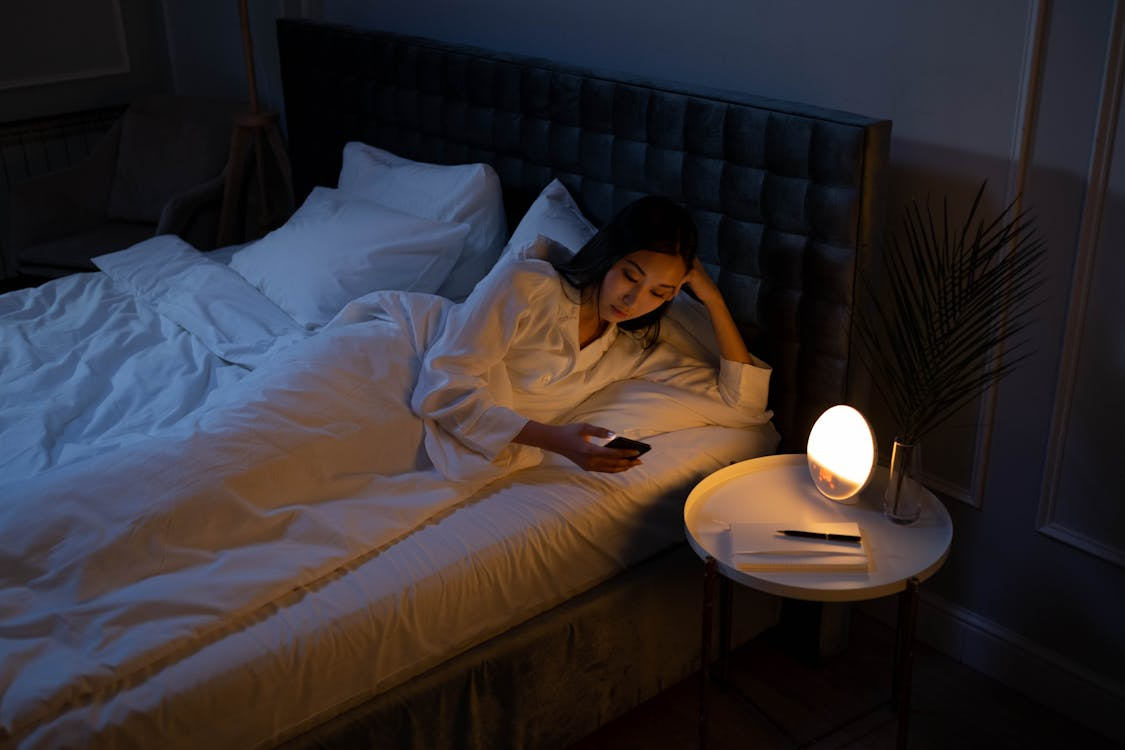
Blue light has become a frequent topic of discussion regarding sleep problems. Phones, tablets, laptops, and LED lighting all emit blue wavelengths, and many people notice that scrolling at night makes it harder to fall asleep. But what exactly is blue light doing to your sleep?
Blue light itself is not harmful in small doses. In fact, it plays a critical role in regulating alertness and mood during the day. The issue arises when exposure occurs at the wrong time.
Understanding Circadian Rhythms
Your circadian rhythm is controlled by a small region of the brain called the suprachiasmatic nucleus (SCN). This structure responds to light signals received through specialized cells in the retina.
When light enters your eyes, especially blue light, it signals the brain that it is daytime. In response, the brain suppresses melatonin, the hormone that promotes sleep.
Melatonin naturally rises in the evening as light decreases. This rise signals the body to prepare for rest by lowering body temperature and promoting drowsiness.
Explore How Sleep Cycles Actually Work to better understand the biological stages of sleep.
Why Blue Light Has a Strong Effect
Not all light affects the circadian system equally. Blue wavelengths, which are abundant in daylight, are particularly effective at suppressing melatonin.
This sensitivity likely evolved as an adaptive mechanism. Blue light from the morning sky helps reset your internal clock each day, promoting wakefulness and alignment with daylight hours.
However, screens and LED lighting emit similar wavelengths of blue light. When exposure occurs late in the evening, the brain receives a signal that it is still daytime.
Delayed Sleep and Reduced Melatonin
Even modest evening screen use can delay melatonin release. This delay may push back your natural sleep onset time, making it harder to fall asleep at your intended bedtime.
Research shows that exposure to blue light before bed can reduce total melatonin production and shift circadian timing later. This can shorten sleep duration, particularly on work or school nights when wake-up times remain fixed.
In addition, engaging digital content often increases cognitive stimulation, which further delays relaxation and sleep readiness.
Read How Hormones Act as Chemical Messengers for insight into melatonin signals.
Effects on Sleep Quality
Blue light not only affects when you fall asleep, but it can also influence sleep depth and architecture.
Delayed melatonin release may reduce time spent in certain restorative sleep stages. Over time, chronic circadian misalignment, often referred to as “social jet lag,” may contribute to fatigue, reduced concentration, and mood changes.
Importantly, individual sensitivity varies. Some people are more affected by evening light exposure than others.
See What Is Brain Fog? for insight into how poor sleep affects mental clarity.
Managing Blue Light Exposure
Managing blue light does not require eliminating screens. Instead, timing and intensity matter.
Reducing screen use in the hour before bed can support natural melatonin production. Many devices now offer “night mode” settings that shift light toward warmer tones, reducing the output of blue wavelengths.
Dimmer evening lighting also supports circadian alignment. During the day, however, exposure to natural daylight strengthens circadian rhythms and can improve nighttime sleep.
Learn How Meditation Changes the Brain for relaxation practices that support healthier sleep.
A Matter of Timing
Blue light is not inherently bad. It is essential for daytime alertness and healthy circadian regulation.
The problem arises when artificial light extends into hours when the body expects darkness. Understanding how screens influence circadian rhythms makes it easier to adjust habits to support sleep.
Protecting sleep is less about avoiding technology entirely and more about respecting the biological signals that guide your internal clock. When light exposure aligns with natural rhythms, sleep tends to follow.